Finishing
How to Block Crochet (Wet, Steam and Spray)
Wet blocking suits wool, alpaca and other animal fibres: soak 20 minutes, squeeze out water, pin to shape and leave 12–24 hours. Steam blocking is the only method that works on acrylic, because acrylic is a plastic — heat permanently reshapes it, and this is irreversible, so it is called "killing" the yarn. Spray blocking is the gentle option for cotton and for pieces that only need light adjustment.
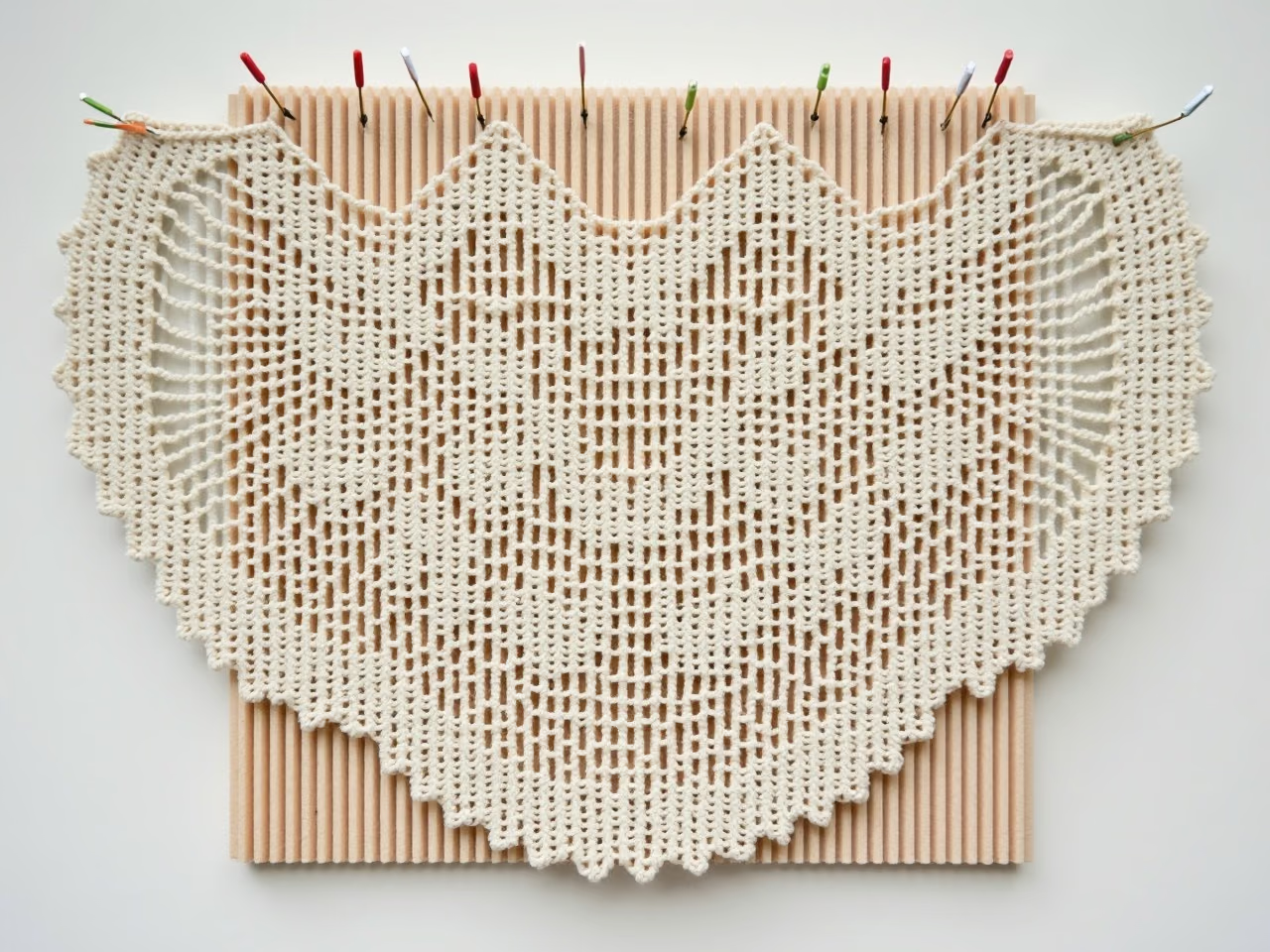
Blocking is the step between “the last stitch” and “actually finished”. It relaxes uneven tension, opens up lace, flattens curling edges and makes granny squares the same size as each other — and the method you use depends entirely on what the yarn is made of.
Getting that wrong is why blocking sometimes appears not to work.
Which method for which fibre
| Fibre | Method | Time | Permanent? |
|---|---|---|---|
| Wool, alpaca, mohair | Wet block | 12–24 h to dry | Until next wash |
| Superwash wool | Wet block, pin firmly | 12–24 h | Until next wash |
| Cotton, linen | Spray or wet block | 8–24 h | Mostly holds |
| Acrylic, nylon | Steam only | under 1 h | Permanent |
| Wool/acrylic blend | Steam lightly | under 1 h | Mostly permanent |
| Silk, bamboo | Spray block, handle gently | 8–12 h | Until next wash |
Wet blocking, for animal fibres
This is the standard method and it works because wool fibres absorb water, become pliable, and then set as they dry in whatever shape you have pinned them into.
- Fill a basin with cool water and a little wool wash. Submerge the piece and leave it 20 minutes — long enough for the fibre to be wet through, not just on the surface.
- Lift it out supporting the whole weight. Wet wool is heavy and stretches under its own weight if you let it dangle.
- Press the water out against the side of the basin. Do not wring. Then roll the piece in a dry towel and press to remove more.
- Lay it on your blocking surface and pin to the measurements the pattern gives, working from the centre outward and putting pins every 2–3 inches.
- Leave 12–24 hours until completely dry, then unpin.
Use rustproof pins. Ordinary dressmaking pins will leave rust marks on damp work, and those do not wash out.
Steam blocking, for acrylic
Acrylic is a plastic. It does not absorb water, so soaking it accomplishes nothing — the piece dries back to exactly the shape it started in. What does work is heat, which softens the polymer enough for it to be reshaped, after which it stays reshaped.
Makers call this “killing” the acrylic, and the name is accurate: the fibre loses its springiness and takes on a softer drape. Often that is exactly what you want for a shawl. It is rarely what you want for a hat you expected to stay structured.
It cannot be undone. Test on a swatch first.
- Pin the dry piece out to shape on a heat-safe surface.
- Set the iron to its steam setting and hold it 1–2 inches above the work. The iron must never touch the yarn — direct contact melts acrylic and leaves a shiny, hard patch that cannot be repaired.
- Move steadily across the whole piece, letting the steam penetrate.
- Leave to cool completely — 20–30 minutes — before unpinning. The shape sets as it cools, not while it is hot.
A garment steamer works as well as an iron and is harder to make a mistake with.
Spray blocking, the gentle option
For cotton, for pieces that need only slight adjustment, and for anything you are nervous about, spray blocking is the low-risk method.
Pin the dry piece to shape, mist it evenly with cool water from a spray bottle until it is damp but not soaked, pat the moisture in gently, and leave 4–8 hours to dry.
It gives less dramatic results than wet blocking and it will not open out lace nearly as much, but it also cannot stretch a piece out of shape, and it is quick.
Blocking a set of squares
If you are making a blanket from motifs, block them all to the same size before joining, not after. Cut a card template to the target dimensions, pin each square out to match it, and work through the pile.
Squares that differ by a quarter inch each will compound across a blanket into edges that do not line up, and no amount of blocking at the end fixes that as well as blocking the components does at the start.
Common questions
Do you have to block crochet?
Not always. Blocking makes the biggest difference to lace, granny squares that need to match each other, garment pieces that must meet at a seam, and anything with curling edges. It makes almost no difference to a chunky blanket in acrylic, or to amigurumi, which wants to stay firm and three-dimensional. If your finished piece already sits flat and measures correctly, you can skip it.
Can you block acrylic yarn?
Yes, but only with steam, and the change is permanent. Acrylic is a synthetic polymer, so it does not absorb water the way wool does — wet blocking it achieves essentially nothing, and it returns to its original shape as it dries. Steam heat softens the fibre enough to reset its shape for good. Because it cannot be undone, test on a swatch first, and never let the iron touch the work.
How long does blocking take to dry?
Wet-blocked wool takes 12–24 hours in a well-ventilated room; thick or dense pieces can take up to 48. Spray blocking usually takes 4–8 hours. Steam blocking is effectively dry in under an hour. Do not speed any of them up with direct heat or sunlight — uneven drying causes uneven shrinkage, and sunlight fades dyes.
What can I use instead of blocking mats?
Interlocking foam floor tiles, the kind sold for gyms and children's playrooms, are the standard substitute and are considerably cheaper than blocking mats sold for the purpose. A clean towel over a spare bed works for a single flat piece if you can leave the bed alone for a day. What you need is a surface that takes pins, does not mind being damp, and is large enough for the piece to lie flat without folding.
Will blocking make my crochet bigger permanently?
On animal fibres, partly. Wet blocking can open a piece up by 5–10% and much of that holds until the next wash, at which point it relaxes back and needs blocking again. On acrylic, steam blocking is permanent. What blocking cannot do is rescue a garment that is badly undersized — it opens out and evens up stitches, but it is not a substitute for correct gauge.