Stitches
Crochet Hook Sizes: mm, US and UK Compared
Crochet hooks are measured in millimetres, and that is the only measurement that is consistent worldwide. US sizes use a letter-number pair (a 5.0 mm hook is US H-8), while UK sizes run on a separate numeric scale that counts down as the hook gets bigger (5.0 mm is UK 6). Always match the millimetre size — US and UK labels vary between manufacturers, and the millimetre figure does not.
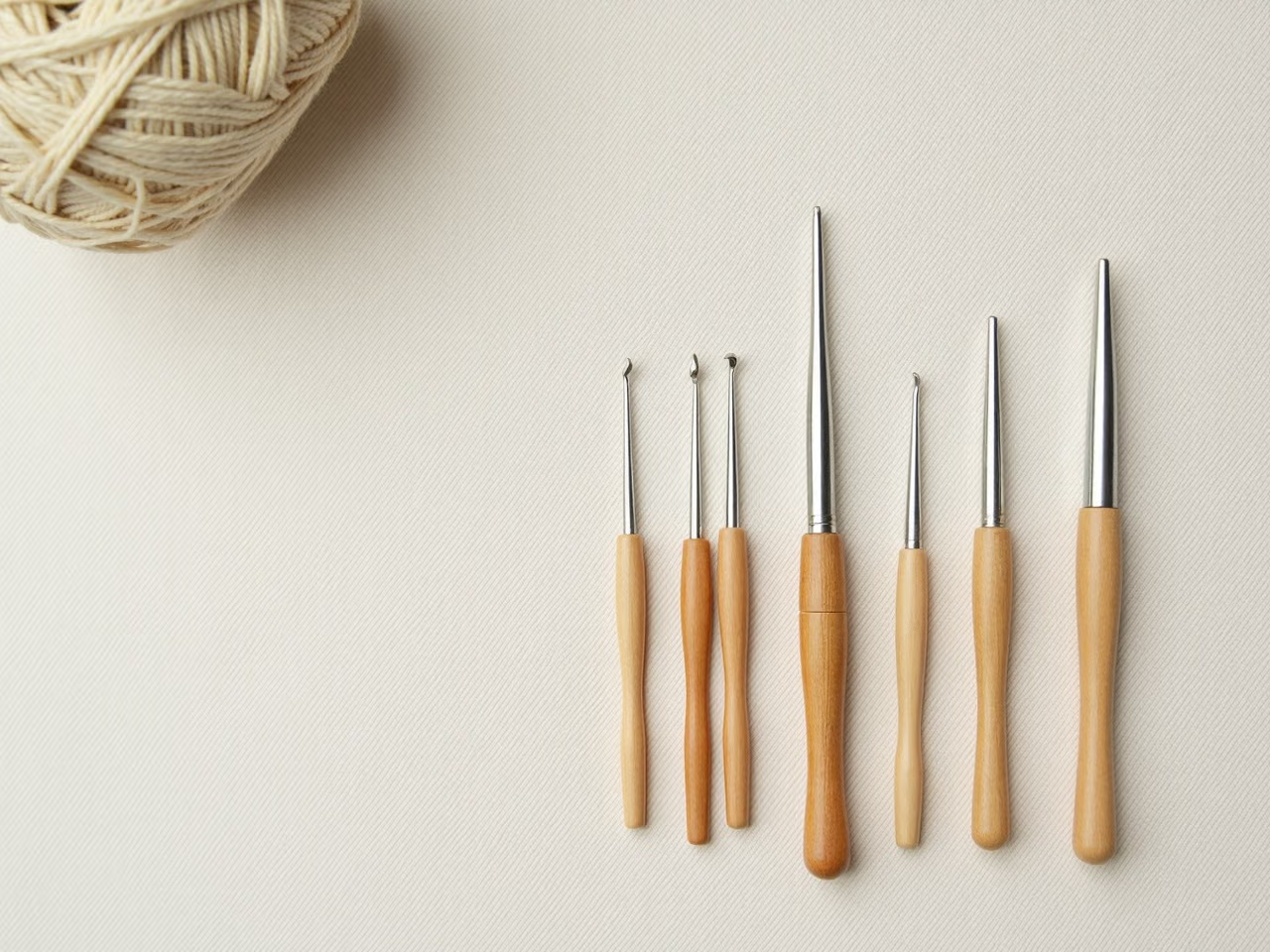
Hook sizing is one of those things that looks standardised until you try to buy a replacement. A pattern says “H”, the hook in the drawer says “5”, the one you order online arrives labelled “6”, and all three might be the same hook — or might not.
There is one measurement that never lies, and it is the millimetre size. Everything below converts to it.
The conversion chart
Millimetre sizes are the reference. US letter-number sizes are the American standard. UK numbers are the older British scale, still printed on hooks sold in the UK and used in older patterns.
| Millimetres | US size | UK size | Usually paired with |
|---|---|---|---|
| 2.25 mm | B-1 | 13 | lace / fingering |
| 2.75 mm | C-2 | 12 | fingering |
| 3.25 mm | D-3 | 10 | fingering / sport |
| 3.5 mm | E-4 | 9 | sport |
| 3.75 mm | F-5 | — | sport / DK |
| 4.0 mm | G-6 | 8 | DK / light worsted |
| 4.5 mm | 7 | 7 | DK / worsted |
| 5.0 mm | H-8 | 6 | worsted / Aran |
| 5.5 mm | I-9 | 5 | worsted / Aran |
| 6.0 mm | J-10 | 4 | Aran / chunky |
| 6.5 mm | K-10½ | 3 | chunky |
| 8.0 mm | L-11 | 0 | chunky / bulky |
| 9.0 mm | M/N-13 | 00 | bulky |
| 10.0 mm | N/P-15 | 000 | bulky / super bulky |
| 12.0 mm | O-16 | — | super bulky |
| 15.0 mm | P/Q | — | jumbo |
| 16.0 mm | Q | — | jumbo |
| 19.0 mm | S | — | jumbo |
Two things to notice. Above 9.0 mm the US letters stop being reliable — different manufacturers assign M, N, P and Q to different millimetre sizes, which is why large hooks are increasingly sold by millimetre only. And 4.5 mm is labelled “7” in both systems while meaning the same thing, which is a coincidence rather than a pattern.
Steel hooks are a separate scale
Steel hooks, for thread crochet and lace, use their own US numbering that runs backwards — higher number, smaller hook:
| Millimetres | US steel size |
|---|---|
| 3.5 mm | 00 |
| 3.25 mm | 0 |
| 2.75 mm | 1 |
| 2.25 mm | 2 |
| 2.1 mm | 4 |
| 1.9 mm | 5 |
| 1.8 mm | 6 |
| 1.65 mm | 7 |
| 1.4 mm | 9 |
| 1.15 mm | 11 |
| 0.75 mm | 14 |
A US steel 7 (1.65 mm) and a US aluminium 7 (4.5 mm) are entirely different hooks. If a vintage doily pattern calls for a “size 7”, it means the steel one.
The chart tells you where to start, not what to use
Ball bands recommend a hook. Patterns specify a hook. Neither is binding, because the finished size depends on your tension, not on the hook.
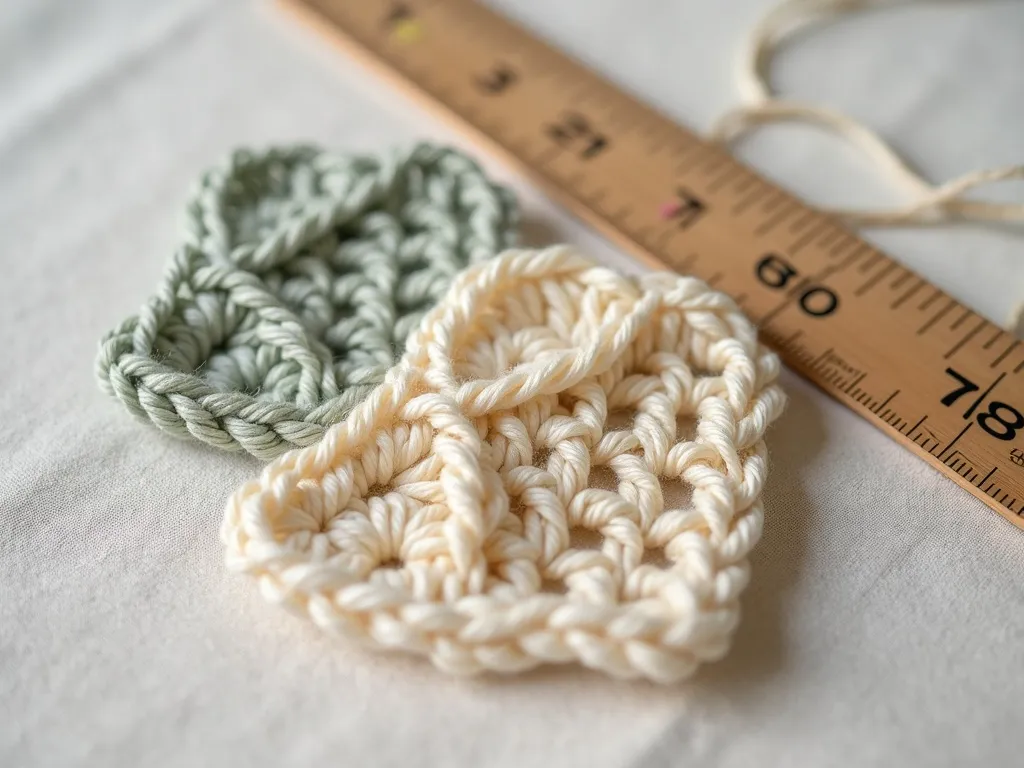
Two people working the same pattern with the same 5.0 mm hook and the same yarn can produce pieces that differ by several inches across a garment. That is normal and it is not a fault in either of them. It is exactly why patterns state gauge.
So the sequence is: start at the hook the pattern names, work a swatch at least 4 inches square in the pattern stitch, measure it, and then change hook size if it does not match. Go up a size if your swatch is too small — a bigger hook makes bigger stitches. Go down if it is too large.
For anything that has to fit — hats, garments, gloves — this ten-minute step is the difference between a finished object and a wasted weekend. For a blanket or a scarf it matters less, though it will still change how much yarn you get through.
Hook size changes yardage more than people expect
Going up one hook size on the same pattern typically adds 10–15% to the yarn used. Two sizes can add 25% or more. The stitches are larger, so even though you work fewer of them to cover the same distance, each one takes more yarn than you save.
This is the usual reason people run out of yarn on a pattern that stated a yardage. The yardage was correct for the hook the designer used. If you swatched up a size to get gauge, buy an extra ball.
What actually varies between brands
Not the millimetre size — that is reliable. What varies is the shape:
- Inline hooks (Susan Bates style) have a head the same width as the shaft, with a deeper cut throat. They tend to produce more even stitches and suit tight crocheters.
- Tapered hooks (Boye style) have a rounded head that narrows into the shaft. They slide through loops more easily and suit loose crocheters.
- Handle shape changes nothing about gauge but changes a great deal about whether you can still crochet after two hours. If your hand aches, this is the variable to change.
None of these change the size. All of them change the feel, and the difference is large enough that it is worth owning one of each in your most-used size before buying a full set.
Common questions
What size crochet hook should I use for worsted weight yarn?
A 5.0 mm (US H-8) hook is the usual starting point for worsted weight / Aran / category 4 yarn, and it is what most ball bands recommend. Use 5.5 mm (US I-9) if you crochet tightly or want more drape, and 4.5 mm (US 7) if you crochet loosely or want a denser fabric such as a bag or a basket. The ball band recommendation is a starting point for swatching, not an instruction.
Is a US H hook the same as a 5 mm hook?
Yes — US H-8 is 5.0 mm, and that pairing is consistent across manufacturers. The letter and the number are two labels for the same size rather than two different measurements. Where brands do differ is in the shape of the head and throat, which changes how the hook feels without changing the size.
Why do UK crochet hook sizes go down as the hook gets bigger?
The UK numeric scale descends because it was derived from wire gauge, where the number counts how many drawing operations the wire went through — more operations meant thinner wire and a higher number. It is a historical artefact rather than a logic you can reason from, so it has to be looked up. Millimetres avoid the problem entirely.
Does hook size change how much yarn I need?
Substantially. Going up one hook size on the same pattern typically increases yardage by roughly 10–15%, because each stitch is larger and consumes more yarn even though you work fewer of them to reach the same measurement. Going up two sizes can add 25% or more. If a pattern states yardage at a specific hook and you are using a larger one, buy an extra ball.
What is a steel crochet hook and why is it numbered differently?
Steel hooks are the very small ones used for crochet thread, lace and doilies, ranging from about 0.6 mm to 3.5 mm. They run on their own US numeric scale that, like the UK scale, counts down as the hook gets bigger — a US steel 7 is 1.65 mm while a US steel 00 is 3.5 mm. Steel numbers and regular US letter sizes are unrelated scales, so a "size 7" steel hook and a "US 7" aluminium hook are nothing like each other.